
Doesn’t January feel like the longest month everrrrr….it can be a bit glum can’t it (weather gloomy, tax bills at the end of the month, Christmas spending bills landing on the doormat and it’s a long time to wait to be paid) but ho hum it’s the same every year, and at least the sun is out again, the days are getting longer, and the sunsets and sunrises have been beautiful. Many of us have been on Project ‘de clutter’, clearing the house, our lifestyle and diet, all of which makes us feel better and more positive.
On the back of a mini drawer clearout I have some fitness leggings that are surplus to requirement if any one wants or needs any.
Gut Purify Progress
Those of us on the Gut Purify are sharing our successes with each other and everyone of us is feeling more energetic, clearer headed and leaner plus we are doing better in our exercise, work rest and play thanks to greater mental clarity, better sleep, controlled blood sugar levels and energy levels. Reported successes, in addition to aforementioned are; blood pressure, cholesterol and fat levels have reduced, sports performance has increased plus skin clarity and brightness has improved.
Water bottles In an effort to help reduce plastic, I am ordering recycled and recyclable water bottles for our classes and PT. They will be black with our logo in blue on them. Profits will be sent to the Australian Fire Relief fund. Hopefully they will be with us shortly (I’m just waiting for a sample to approve).
Welcome to the DYBO newcomers and returners – it’s wonderful to share our wonderful classes and friendships with you. If you are delaying your return for whatever reason, we are waiting with open arms to have you back, can’t wait to see you!
Practicing thankfulness
You know I believe in practicing thankfulness for excellent mental and physical health, well check out this link for research evidence that supports my opinion.
As well as thinking positively, remember to eat positively for brain health?
Here are the top 5…
Omega-3s
Omega-3 fatty acids are important for helping our brain to function at its best. Research suggests that the fatty acid docosahexaenoic acid (DHA) supports normal cognitive function. Fish oils, such as those from Krill are high in Phospholipids, which also make brain cell membranes. If you eat fish choose wild caught fish ideally from very cold and more remote water regions thus reducing the risk of higher levels of pollution and a good quality of fish oil. Eat smaller fish with a shorter life span because it reduces their exposure to pollutants. Omega-3 rich fish like salmon, anchovies, and sardines are great options. Try for at least 2-3 servings of fatty fish per week (too much can lead to high levels of mercury being ingested). Plant sources are flax, walnuts, chia and hemp seeds but these provide a low conversion rate to useable Omega 3’s . If you fall short of recommendations take a high quality Omega 3 replacement; I give Declan Synergy Omega 3 to help with his knee joints in particular but his brain health too. 500mg is plenty but up to 5000mg is deemed safe. Omega 3 is fantastic to assist with reducing chronic inflammatory conditions too.
Antioxidant Vitamins
Antioxidant vitamins and minerals protect against oxidative stress which is connected with damage to the brain. While further research needs to be done, some studies demonstrate that antioxidant deficiencies in older adults may exacerbate cognitive impairment.
You can get your daily requirement for antioxidants from whole vegetables and fruits, which can be an excellent source of vitamin A and C plus insoluble fibre, for the gut. For the antioxidants Vit E and selenium, eat nuts and seeds like almonds and brazil nuts. All these foods are great for Gut health (the Microbiota aka the second brain) which is also linked with brain health -many studies suggest a healthy Microbiome is key to prevention of the brain diseases Alzheimer’s and Dementia
Vitamin B12 and Folate
A lack of these two vitamins may increase blood levels of homocysteine, an amino acid that’s been linked with cognitive impairment, according to some research. Experts suggest that deficiency of Vitamin B12 could be the cause of reduced cognitive function as we grow older rather than the aging of the brain its self.
Dark green vegetables provide folate e.g. leafy greens, asparagus, broccoli, Brussels sprouts and avocado plus plant-based proteins like beans, peas and lentils.
Vit B12 is found in, animal protein like salmon, sardines, tuna, beef and eggs and if a vegetarian I suggest a nutritional yeast supplement or as an ingredient in food.I take Pro Argo 9 for Vitamin b12, C D and more.
Water
75 % of the weight of your brain is water! When you don’t drink enough water – you will experience mental impairment (and often headaches). Most Brits are terrible at drinking enough water and are chronically dehydrated. Aim for two litres of water daily. Decaf teas, coffees and water filled foods such as fruit and veggies are a great source of water too.
Phytonutrients
Plant nutrients called “phytonutrients” act as antioxidants and anti-inflammatory agents in the body. Phytonutrients called polyphenols (like resveratrol) may increase memory, performance and activate neuroprotective pathways assisting us with spatial awareness and coordination. Some research demonstrates that consuming flavonoid polyphenols may support cognitive health and memory
Good news is that it’s in dark chocolate and red wine? So small amounts of these foods can actually help your health since they contain high levels of polyphenols. However as we know they have disadvantages too and we are looking at a square of dark chocolate occasionally and a small glass of wine every two weeks as enough before disadvantages outweigh benefits. More ‘on message’ foods are berries – strawberries, blueberries and raspberries – as well as in citrus fruits, red grapes and tea.
Regular exercise, good quality and sufficient sleep, well managed stress and regular social interaction with others (especially friends and family) is also important for good brain and mental health
Sardines & watercress on toast (from BBC Good Food)
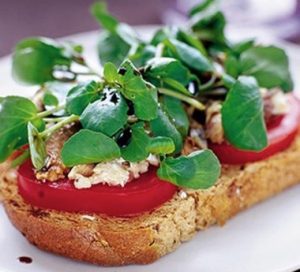
A fab brain boosting light lunch, supper or snack at any time.
My Mum used to make us eat sardines on toast, I confess I hated it, I don’t eat fish now but I wish I could for all the great benefits.
This looks much nicer than what my Mum served up !!
Let me know what you think…
- Slice of sour dough, whole grain bread
- 1 garlic clove, halved
- 1 can Sardines drained)
- 1 handful of organic watercress or wild rocket or mix
- A splash of balsamic vinegar
- Lightly toast the bread. Rub the cut side of the garlic over the surface of the toast and arrange the tomato slices on top. Add seasoning to taste
- Break up the sardines with a fork and arrange on top. Pile on the watercress and drizzle with balsamic vinegar.
Have a fabulous happy healthy week!
Love ya,
Helen x
