
A heatwave is on its way, well bloomin’ typical! But hey ho, we can all make the most of what ever is left of Summer. For all you parents, just one more week – you can do it! And to all you teachers, just one more week, brace ya selves!!! Ha ha!
I’m giving you an early heads up for the September timetable, which is slightly different for the first couple of weeks as Dec and I are taking a very much needed holiday, but I have you covered – you have three incredible teachers looking after you whilst I’m away and the girls have fabulous classes planned.
Please give them all your love, appreciation and optimal support via attendance as they have gone out of their way to create wonderful classes for you (I know you usually do).
If you have been keenly partaking in picnics, BBQ’s, drinkies in the pub garden plus the odd ‘Mr Whippy’ you might have noticed a change in your waistline, skin and general wellbeing. Summer can be wonderful for fresh salads and veggies but we sometimes let our self control slip a little too much, resulting in an unhealthy microbiome (Gut Health).
As you know I am a Gut Health consultant (I’ve been banging on about it for many years) and am running a post Summer ‘21 day Gut Purify & Reset’ course commencing 18th September for those of us who want to get our gut, mood and general health and figure back on track and give our immune system a boost before cold and flu season (70% of our immune system comes from our gut)! Btw, a colleague is starting one on the 11th if you want to get cracking sooner.
Our Reset involves a course of supplements which I will have to order for you. Last orders 31st August.
There are many aesthetic and physiological, psychological conditions (some very serious) linked with an unhealthy microbiome and last week the Telegraph included the following article:
The Seven Signs of an Unhealthy Gut – and How to Fix It (Telegraph 20/8/24)
The saying ‘you are what you eat’ has never been more true. Here, experts reveal how to spot and solve an unhealthy gut.
How to improve gut health
Gut health can affect everything from the appearance of your skin to your sleep
We’ve long been told that “you are what you eat”, but only in recent years has research revealed that the gut – and its health – is key to almost every aspect of our wellbeing, from mental clarity to mood, and from the appearance of your skin to your energy levels and sleep quality. Even more compellingly, poor gut health may also contribute to chronic disease, such as cardiovascular issues, diabetes and even cancer.
The latest research into gut health demonstrates that lifestyle and diet can create significant changes to the gut microbiome and, consequently, to general physical and mental wellness.
Increasingly, there is an awareness in scientific circles that “poor digestion” is not always just a one-off after an excessive night or a holiday. Yet, according to research, the public remains largely ignorant of the impact of digestive health on their overall wellbeing: only one in five people know what the “microbiome” is, and around half don’t know what gut-supporting prebiotics and probiotics are.
Even without the science, we know that our mental state can affect our stomach, through our language and idioms – “my stomach was in knots”, for example. Our minds and bodies send signals to our stomachs. Doesn’t it make sense for our stomachs to send signals back?
How important is gut health?
The “gut microbiome” refers to the microorganisms – both good and bad bacteria, as well as fungi – in the gut, which help to break food down, absorb its available nutrients and excrete its waste products. While good and bad bacteria are essential, they can proliferate rapidly, so the “bad” needs to be kept in check by the “good” to maintain balance.
Since nutrition is vital to the support of the immune system, as well as to the balance of hormones (such as serotonin, which impacts mood and emotional wellbeing), there’s increasing recognition of how important the gut microbiome and good digestion are in supporting overall health.
“We can now see that the gut microbiome plays a role in many different bodily functions outside of digestion,” says Rick Miller, a Harley Street dietitian and consultant at King Edward VII’s Hospital. “As well as immune function and metabolism, we’ve more recently come to recognise its impact on mental health conditions, including anxiety and depression.” This is known as the gut-brain-axis.
What are the symptoms of an unhealthy gut?
Experts say that there are seven key signs of an unhealthy gut, and some are fairly easy to identify, since they’re clearly linked with poor digestive function. One group of symptoms is known as “dysbiosis” and includes abdominal discomfort, bloating, gas, constipation, heartburn and diarrhoea. They indicate that not enough stomach acids (which break down food) are being produced by the gut, so food is fermenting, rather than being broken down and digested.
The second symptom is sugar cravings In the same way that “like attracts like”, gut bacteria feeds upon and craves more of what is being received. The result? If your diet is healthy, your gut will want more of what it’s used to getting – but if you’re feeding the “bad” bacteria with sugar-rich and processed foods, these bacteria will multiply and your hunger signals will nudge you towards making even more unhealthy choices.
Developing a food intolerance may also indicate that something is amiss in the gut-health landscape, since an unhealthy gut is less able to cope with or process certain substances.
The Gut Health Reset
Unsurprisingly, weight fluctuations signal an unhappy gut. Weight loss may be attributed to small intestinal bacterial overgrowth, while weight gain may indicate insulin resistance, which reduces the absorption of nutrients and, in turn, sparks food cravings. This can also be a cause of Type 2 diabetes.
An estimated 70-80 per cent of your immune system is in the gut lining, which means that the development of allergies and autoimmune conditions, such as psoriasis, can be an indicator of an unhealthy gut, as can irritable bowel syndrome, multiple sclerosis, Parkinson’s disease and amyotrophic lateral sclerosis. As the largest organ of the body, the skin may also be impacted, through conditions such as acne, rosacea or eczema. Bad breath and joint pain can also be signs.
Because research shows that gut heath has an impact on cognitive and mental health, feelings of fatigue may be indicative of diminished gut health, as may headaches, difficulty concentrating and poor memory, as well as mood swings and insomnia. Migraines can also be worsened or triggered by an unhealthy gut.
How processed foods affect the gut
“Many processed foods are low in dietary fibre, which is essential for maintaining a healthy gut,” explains nutritionist and naturopath Adriana Taralli. “Additionally, they may be high in sugar and artificial sweeteners.” The problem with this, she says, is that sugar can promote the growth of harmful bacteria in the gut which, in turn, creates microbial imbalance. And what’s more, a 2021 study indicated that E.coli and E. faecalis – two types of “bad” bacteria that are present in all gut microbiomes but generally harmless in healthy people – can have their pathogenic ability exacerbated by artificial sweeteners. This means that they can attach to and invade the thin lining around the intestinal walls, disturbing intestinal health.
A 2019 study published in The BMJ demonstrated that more than half the calories eaten by the average person in the UK come from ultra-processed foods (UPFs). Examples of these include breakfast cereals, mass-produced bread, biscuits and flavoured yogurt. Tell-tale signs that a foodstuff is a UPF tend to be that the product has a long shelf life and more than five ingredients, many of which will have unfamiliar names or aren’t items that could be bought as individual products. Not only are UPFs disruptive to the gut microbiome, but in his book Ultra-Processed People: Why Do We All Eat Stuff That Isn’t Food … and Why Can’t We Stop? Dr Chris van Tulleken suggests they are behind a number of health conditions, including obesity, cardiovascular disease and Type 2 diabetes.
What are the signs of gut inflammation?
“Gut Inflammation can manifest with a range of symptoms, such as persistent abdominal pain and bloating, chronic diarrhoea or constipation, blood in stools, unexplained weight loss, or nausea and vomiting,” says Dr Anthony Hobson, a senior clinical gastrointestinal scientist at the Functional Gut Clinic and founder of Tummy MOT, an online resource dedicated to digestive health.
“This inflammation in the gut can be caused by conditions like inflammatory bowel disease, which is a group of chronic diseases where the gastrointestinal tract is inflamed. The two most common are Crohn’s disease and ulcerative colitis. Crohn’s can affect any part of the digestive tract, and may involve deep ulcers and thickening of the intestinal wall, while ulcerative colitis is limited to the colon [large intestine] and rectum. It primarily affects the innermost lining of the colon, leading to ulcers and inflammation.”
Research from the University of Nottingham and funded by Crohn’s & Colitis UK and Coeliac UK shows that over 500,000 people in the UK are affected by these conditions.
The health implications can be severe. For example, the inflammation can interfere with the absorption of nutrients, risking deficiencies, weight loss and malnutrition. Additionally, says Dr Hobson, there is an increased risk of infections, due to a compromised gut barrier. “Long-term intestinal inflammation has also been linked to an increased risk of colon cancer, as well as gut perforation or bowel obstruction, which are medical emergencies.”
What is a leaky gut?
“Rather than being a health condition itself, a leaky gut is actually a symptom of something else,” says Dr Hobson. “The most common cause is likely to be a tummy bug or imbalance in the gut microbiome, with inflammation damaging the bonds that hold the gut lining cells together.”
Dr Hobson continues: “The cells that form our gut barrier are packed tightly together, like puzzle pieces. The term ‘leaky gut’ refers to when the spaces between these cells become bigger, and the gut lining becomes more permeable, allowing toxins to seep into the blood and around the body.”
Other causes are stress and depression, food intolerances and excessive alcohol intake, and symptoms can include bloating and pain, as well tiredness and skin conditions such as eczema.
To test for a leaky gut, the patient drinks a solution containing sugars that the body can’t digest but that people with healthy gut linings will be able to absorb, and a urine sample is taken six hours later. If the sugars are still present in the sample, this may indicate a leaky gut.
Dr Hobson says that solluble fibre from whole foods helps to prevent a leaky gut, as it encourages the gut to produce more mucus, which coats its walls like “bacterial sunscreen”. Amino acid L-glutamine may also be helpful, but ultimately, says Dr Hobson, “the best way to manage a leaky gut is to treat the underlying cause, such as reducing stress and identifying any food intolerances”.
How to reset your gut health
If you don’t have a diagnosed gut condition, the gut microbiome can shift a few days after you make alterations to your diet, says Rick Miller. If you make and stick to the right changes to your diet, lifestyle and exercise regime, you can rapidly and sustainably improve your gut health. He suggests you try limiting alcohol, reducing consumption of UPFs and taking steps to manage stress.
Clinical gastrointestinal physiologist Jordan Haworth, who has appeared on the Channel 4 series Know Your S–t: Inside Our Guts, suggests strategies such as diaphragmatic breathing exercises, mindfulness and meditation. He also advises increasing fibre intake, with a wide variety of plant-based foods, such as fruits, vegetables, wholegrains, legumes, nuts and seeds.
Haworth also recommends the dietary inclusion of fermented foods, such as live yogurt, kefir and kimchi, which are probiotic and can help to increase beneficial bacteria.
Focusing on foods rich in prebiotics is also a good idea, adds Haworth. These include garlic, onions, asparagus and artichokes, as well as polyphenols, found in foods like berries, dark chocolate and green tea, which can promote the growth of good gut bacteria.
How to starve bad gut bacteria
“Harmful bacteria, such as Clostridium difficile and some strains of Escherichia coli, often thrive on sugars and refined carbohydrates, such as processed cereals, white bread and pasta, which are quickly broken down into sugars in the body. This allows them to multiply and potentially cause health issues,” explains Adriana Taralli. Cutting back on these foods in favour of complex carbohydrates, such as wholegrains like brown rice, quinoa and oats, and starchy vegetables, such as sweet potatoes, can help to keep this pathogenic bacteria in check.
She also recommends increasing fibre intake by way of leafy greens, broccoli, beans and lentils. “Dietary fibre is not digestible by humans, but serves as a valuable food source for beneficial gut bacteria,” she says. “These microbes ferment fibre and produce short-chain fatty acids, which are associated with reduced inflammation and improved gut health.”
How to improve gut health naturally
According to Jordan Haworth, we should focus on “the two Fs and two Ps: fibre and fermented foods, and prebiotics and polyphenols”. These include foods high in fibre, such as chia seeds, oats and many plant foods, which help the gut to produce more mucus, improving the environment for gut microbes.
Fermented foods, such as live yogurt, kefir and kimchi, also play an important role. They are probiotic foods and introduce beneficial bacteria into the gut. Aim for at least three servings of fermented foods daily.
Prebiotics, not to be confused with probiotics, are found in a variety of plant-based foods such as garlic, onions, pistachios and legumes, and they help to selectively feed and grow the beneficial bacteria already in your gut.
Make sure you’re getting enough polyphenols, too. These are gut-loving plant chemicals that act as antioxidants, linked to preventing the growth of “bad” bacteria while promoting more beneficial bacteria. They’re found in fruits and vegetables, such as blueberries, as well as dark chocolate and spices like turmeric.
What are the signs that your gut is healing?
Dr Hobson advises that common signs of a healthier gut include improved digestion, signalled by more regular, complete bowel movements, and fewer issues with bloating, gas, constipation and diarrhoea. He says that you might also expect to feel more energetic and enjoy better, more restful sleep, alongside an improved, steadier mood. Outwardly, a healthier gut may be indicated by a complexion that is clearer and more radiant.
What foods to avoid for gut health
Processed foods are a part of life and, as long as they are eaten in moderation alongside a wide variety of wholefoods, they shouldn’t be a cause for alarm. As we’ve seen, however, UPFs are best limited if you want a healthy gut. When selecting foods, two good questions to ask yourself might be, firstly, whether it looks close to the way it looked when it was picked, plucked, gathered or slaughtered, and secondly, whether your grandparents would recognise the names of all of the ingredients. A “no” to either of these indicates a food that’s highly processed.
In general, swerve food and drinks with long shelf lives and multiple ingredients, especially if these have complicated names and aren’t things you’d be able to buy as individual items. Common culprits include pre-prepared frozen meals and mass-produced baked goods, such as packaged biscuits and cakes. Many breakfast cereals (particularly sugary ones) are also best avoided, as is confectionery and processed meats, such as sausages and sandwich ham. Flavoured yogurts, fizzy drinks (such as cola and lemonade), energy drinks and distilled spirits, such as vodka, gin, rum and whisky, should also be consumed infrequently. These are seen as worse than other types of alcohol because they don’t contain any polyphenols.
It’s worth remembering, too, that many so-called “healthy foods” are actually highly processed – for instance, protein bars are often packed with sweeteners and emulsifiers. Vegan “meat alternatives” are another example. Although there is solid evidence to suggest that a largely plant-based diet is beneficial to health, the kind of food that’s eaten is important. More than half of the UK population have added meat substitutes to their diets, but many of these meat-free products are full of colourings, preservatives and additives, and are high in sugar, salt and saturated fat.
That said, real meat can also be problematic, depending on how it’s farmed. “Concentrated animal feeding operations (CAFOs) can impact gut health,” says Taralli. “CAFOs often use hormones to promote animal growth and antibiotics to prevent disease in crowded conditions. The consumption of antibiotic-treated meat may disrupt the gut microbiome in humans, potentially reducing the diversity and balance of beneficial bacteria.”
Fried foods should also be limited, since they tend to be cooked in oils that are high in trans fats, which can negatively impact the gut lining and contribute to inflammation. Air frying is generally considered a healthier alternative to deep frying because it uses hot air to cook food, with minimal oil – and therefore fewer trans fats. More research is needed, but air frying may have a less detrimental impact on gut health than deep frying.
Signs of an unhappy gut!

The week ahead…
If you are usually a Monday Night participant, I have created content for our classes on Tuesday night to meet your needs so you don’t miss out. Come and join the fun and fitness!


No Classes on Wednesday, or Friday but DYBO Membership holders have over 1200 classes to choose from on DYBO TV or we can send you links for the last 3 weeks if you wish – let me know asap.

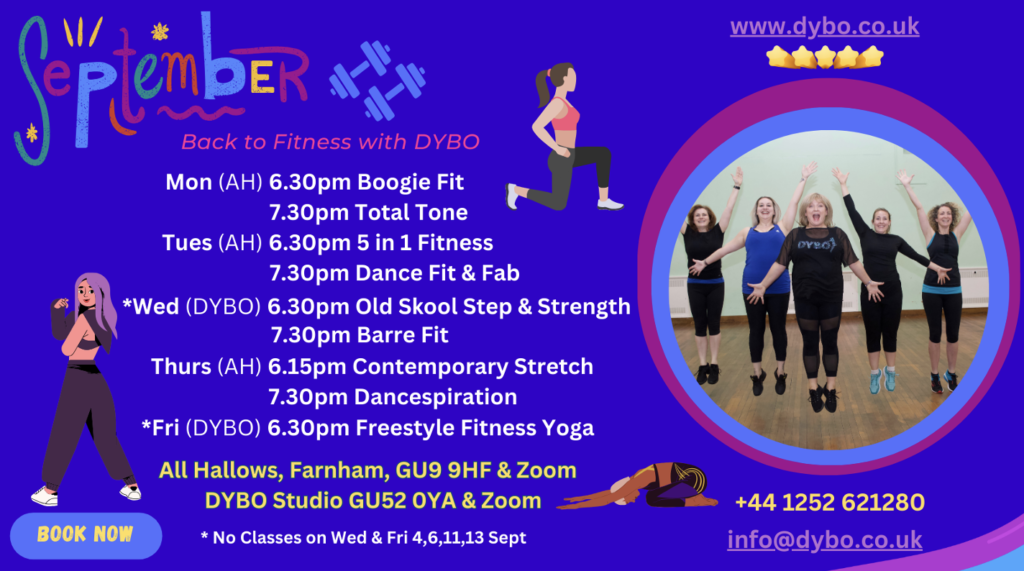
September looks like this
I found this recipe on Gut Health Doctor website – looks yummy!
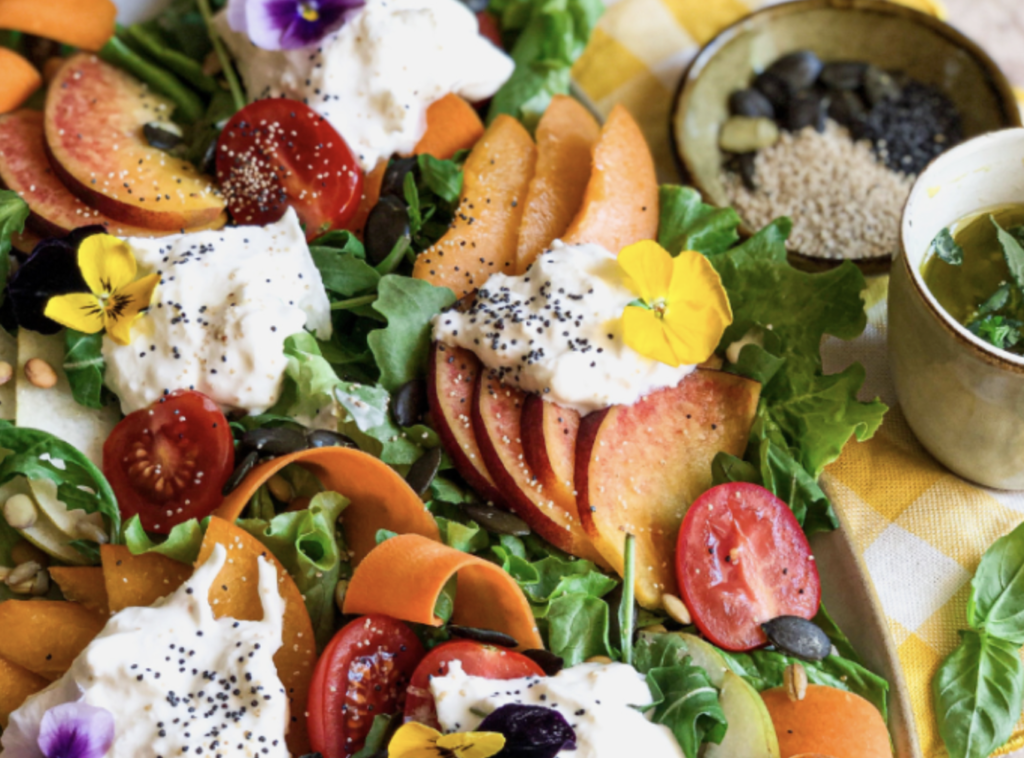
Enjoy this seasonal salad…
SALAD
- 2 peaches, sliced
- 2 pears, sliced
- 1 large burrata
- 3 cups rocket
- cherry tomatoes
- 2 baby gem lettuce, halved (or lettuce of your choice)
- 1/2 cup pumpkin seeds
- 1 carrot, shaved or grated
- 2 cups pearl barley, quinoa or brown rice, cooked
- 1 cup legume of your choice (we have used green lentils)
BASIL-MINT VINAIGRETTE
- 1/3 cup extra virgin olive oil
- 1/4 cup fresh basil leaves, chopped
- 1/4 cup fresh mint leaves, chopped
- 1 lemon, juiced and zested
- 1 tsp dijon mustard
- 1/4 tsp salt (or to your taste)
- In a mason jar or lidded container, combine all the vinaigrette ingredients. Shake to combine.
- On a large platter, layer rocket and baby gem lettuce along with the other ingredients. Tear up the burrata on top.
- Drizzle the end of summer salad with basil mint vinaigrette right before serving.
Have an awesome week,
Love ya!
Helen x

———————————————————————————————————————-
DYBO Live & Online – Next weeks Classes are as follows:
At All Hallows, Farnham & DYBO Studio, Church Crookham (Book in Advance only): Zoom class details further down the page.
Tuesday (AH)
6.30-7.15pm: 5 in 1 & Total Tone – with bands, handweights and mat.
7.30-8.15pm: Dance Fit & Fab
Thursday (AH)
6.15-7.20pm: Contemporary Stretch – various equipment used at each class, contact me for info.
7.30-8.30pm: Dancespiration
—————————————————————————————————-
Joining us at All Hallows or The DYBO Church Crookham Studio? – Protocols and Information
I’m so happy to be able to run Face to Face classes at All Hallows and at the DYBO Studio in Church Crookham. My primary objective is to ensure that we all have a wonderful time with effective and fun classes that are engaging, relaxed and of course, safe.
Preparation
1) Firstly ensure that you have booked by sending us an email info@dybo.co.uk confirming all the classes you wish to attend plus your payment method, be it as a member, using your voucher, or pay as you go. No on the door bookings or payments can be taken. Bookings are not refundable or transferable. I will keep records of all attending, please also keep a record of your own attendance too.
2) Preparing your kit bag/box. This depends upon the class you are attending.
Boogie Fit, Dance Fit and Dancespiration crew will only require your indoor trainers/dance shoes to change in to, sweat towel, and drink.
Total Tone and 5 in 1 crew – in order to prevent cross contamination currently I am not sharing equipment in a group exercise setting so you will need your mat, a resistance band and light hand weights/equivalent in addition to your trainers, sweat towel and drink.
Contemporary Stretch crew need a mat, band, chi ball and on the last Thursday of the Month you will need 2 x tennis balls and a sock for our Trigger Point and Myofascial release class !
3) Re borrowing equipment – if you would like to try a class or have forgotten equipment then you may borrow equipment on that occasion and please ensure that you sanitise it before and afterwards (sanitising products supplied). I can assist you with sourcing your own equipment inexpensively, moving forward.
On the night
*When you arrive at All Hallows, enter the school via the gates to the left as you face the school and follow the road around the school buildings.
*Please park in the playing courts and walk between the old school building and new sports hall, up a few steps on to the outside seating area, the studio door is to your right.
*Participants are required to arrive 5-10 mins before the class.
*Please change into your clean trainers for indoor activity as you enter, e.g. slip off your outdoor shoes, place your bag, walk to activity area then put indoor shoes on, the same in reverse to leave. This is to maintain the hygiene and cleanliness of the space, avoiding stones and glass being walked in and potentially causing injury and to protect the lovely new wood floor.
*The toilets are open to use but please arrive changed, ready for activity so as to keep use time minimal and avoiding queues.
*After a wonderful class change from your indoor trainers to outdoor shoes and sanitise your hands again if you wish.
*Please tell friends and family about our wonderful classes!
When joining me at the DYBO Studio (No.42, GU52 0YA) I will send information directly, including entrance code for the Studio and please note, advanced booking is required.
Fees, you have THREE options!
Please note that all Classes must be booked and paid for in advance and are non transferable or refundable.
Online payments only.
45 min Class – £8.00, 60/65 min Class – £8.50.
10 Class Voucher: £75 (to be used within 12 weeks of purchase).
Membership: £55, unlimited classes, plus a bonus of free access to all class recordings on our DYBO TV channel, and another bonus of a £5 discount for one to one services for current membership holders.
To be paid by the 1st day of the month (at the latest) and is valid from the first to last day of calendar month.
One full month’s notice of membership suspension/cancellation is required with one membership restart permitted within a 12 month period.
Bank details are UK Fitness Academy Ltd.
Sort Code 09-01-28, Acc No. 04284324
Please email me when you have made a payment and use your name and what it’s for as a reference. eg. Jane Smith Class Voucher
————————————————————————————-
Joining us on Zoom? – Links and Information
Tuesday
6.30pm 5 in 1 & Total Tone
7.30pm Dance Fit & Fab
Thursday
6.15pm Contemporary Stretch
7.30pm Dancespiration
****** All the above classes change and vary weekly! *****
How to prepare your Zoom environment
- You need space to move 2 side steps, 4 walks forward, 4 backward. Move trip hazards and furniture as much as you can (get help, be careful!) to give you maximum space for upper and lower body movement. Roll up rugs or secure them so they don’t slip or cause you to trip.
- Plugging your device in to your TV with an HDMI cable is brilliant as it gives you a good picture of you (like a mirror) and me – as well as boosting the sound if you go through the TV/Hi-Fi sound system. If you can place your device under the TV, then even better.
- I know some of you are using your phones – try to plug in to a speaker system (even those little speakers we have when we go on holiday would help) so that you can hear better as you move back from the phone. Angie has tried Bluetooth earphones and it worked well.
- Ensure you have maximum access to your Wi-Fi in the house and as close to the router as is feasible. Take phones off the Wi-Fi system and pop them on to your 4/5G network or place on airplane mode, unless that’s what you are using to join us, obviously. Ask family to do the same for the duration of your class – keep them off the internet whilst you need the bandwidth. The more bandwidth you have, the better the picture and sound and the less likely you are to lose the feed. Your health is a priority at this time and I’m sure they can do something else for that short time!
- Ventilate your exercise space, have plenty of water and towels to hand, keep your exercise equipment close – if you need anything, let me know.
- Wear correct footwear for your activity – putting an old pair of socks over the toes and ball of your trainers will help reduce friction when exercising on carpet (if they are a really old pair, cutting the toes open and then just having them over the ball of the foot is even better). It’s up to you if you want to dance or train in bare feet but be careful if you don’t usually do this as it takes time for the muscles and connective tissue of the feet and rest of the body to adapt to barefoot training.
- Make your own gym equipment. Save laundry liquid or milk bottles – you can fill them with water or wet sand/rice etc. to add weight and make a dumbell/kettlebell. I recommend you make a few in differing weights and you have written on them so you know what they weigh and seal the caps with tape to prevent leakage. Get a heavy duty shopping bag and put weighty items in it, check they can’t fall out and you have a kettlebell alternative. Make your own hurdles, put cushions, pillows, boxes, books on the floor to jump over. Use household items as floor markers for circuit activities. The stairs and outdoor steps are great temporary steps/benches for cardio and upper body work. The garden is a great open space to make an assault course or if you can get a signal, take your class or PT session outside, but do make it safe.
Disclaimer
I declare that all of the information I have given (both written and verbal) is accurate and truthful. I know of no reason why I cannot participate fully in any exercise programme and I do not deem it necessary to consult my medical Practitioner/GP/specialist. I undertake to inform my instructor should any information change.
I understand that I participate at my own risk and that any information given is not intended to replace or represent medical advice. I agree to comply with all terms conditions and class protocols and instructions as outlined above and whilst attending DYBO classes/training.
Do not attend classes if experiencing symptoms of Covid 19, Flu or airborne transmissible infection or have tested positive.
Attending any DYBO class will assume agreement with above terms and disclaimer.
