
Read on for tips to help you get to where you are going!
I don’t think many of us can fail to be inspired by the super human efforts of those running the London Marathon, be they the wheelchair athletes, visually/hearing impaired, people fighting/living with cancer or disease, professional and amateur racers or the fund raisers running in costume,(eg Big Ben, sorry Elizabeth Tower!!). Months (often years) of preparation is essential to even get round the course let alone achieve a personal best. Some of you might be inspired to run a marathon, or physical challenge, take up/ return to sport, or simply improve personal health and fitness after seeing people just like you achieving their goals. I recommend that you strike whilst the iron is hot and before the inspiration wanes but please do take advice from the experienced, professionals and legitimate experts in the challenge you wish to pursue. Appropriate preparation – physically and mentally – will keep the motivation ball rolling, minimise potential injury, disappointment and will lead to success.
Taking a step by step individual approach is wise, however. Consider these generic suggestions as a starting point
Clearly defined goals, eg SMART goals,
S=specific. Exactly what is it you want to achieve? e.g. run the London Marathon/ touch your toes/ learn to ride a horse?
M=measurable. Can you measure the success achievement of your goal e.g. did you run the marathon/did you touch your toes/ride a horse?
A= achievable. Given your talents, potential, motivation and resources (finances, equipment, support, advice) available or sourceable, is this an achievable goal?
R= relevant. Is this goal relevant to you and your life, why do you want to reach this goal? What is the objective behind the goal, and will this goal really help you achieve that? (Results based is also used as the R in Smart goal setting, e.g. you might want to run the marathon in a certain time, earn a certain salary, lift a certain amount or lose a specific amount of weight)
T=time specific. When do you want to achieve the goal by?
If your goal is a physical one, consider these stages of training…
- Create strong, stable foundations, this requires time spent on achieving correct postural alignment in order to reduce wear and tear injuries, minimise friction and maximise technique, strength, power and endurance. Performing a combination of stability and flexibility exercises prescribed specifically to meet you individual needs, executed with accuracy and optimal frequency will achieve best results on which to build your fitness.
- Aquire optimal technique, and relevant fitness and skills. Seek qualified and experienced guidance from a recognised expert/professional in the sport/activity you wish to improve in.
- Undertake Optimum training load and frequency. People often go too hard, too soon risking injury, or they don’t train at the correct intensity or duration. Note that HIIT is very popular, as are military or athletic boot camps and whilst undoubtedly these workouts can produce excellent fitness gains, the injury rates experienced in gyms/venues where these types of workouts have increased in popularity, has risen significantly. To see full report go to https://www.minervamedica.it/en/journals/sports-med-physical-fitness/article.php?cod=R40Y9999N00A19021210)Some Any exercise performed with poor technique or that is inappropriate for the person attempting it, can result in injury. When under the pressure of group competition, working with weights at speed, getting as many reps done in a specified time often resulting in uncontrolled momentum and poor form, lack of correct technique or understanding of where and how the exercise should be felt is bound to increase the risk of injury. Client focused coaching is key, giving accurate advice, coaching tips, and recommending an alternative or modified exercise is where the best fitness/coaching professionals stand out from the rest keeping their clients safe and moving forward towards their goals!
- Sufficient rest, and training balance. Sufficient recovery between training sessions is key to creating fitness gains and reducing the risk of injury. When we train optimally( ie Progressive over load over time) our muscle cells are broken down, the body systems will then repair them ‘stronger’ in order to adapt to the increasing load, this is the key principle and purpose of fitness training. Optimal training will also bring about greater neural efficiency (assisting improved balance, co ordination, technique, skills and power)and improved mobility, flexibility and endurance. We must allow our body time to recover for at least 24 hours between maintenance or recovery sessions and 48-72 hours for high intensity training, A maximum of two high intensity sessions per week is recommended for amateur athletes and fitness enthusiast and they should be separated by maintenance, recovery and fun leisure type training. Everyone needs 1-2 days a week off training for the body to recover, heal and for muscle glycogen levels to recover fully. Recovery days can be active but different form training load. Unless you are training for an event that is longer than an hour in duration, working out hard for longer than an hour can be detrimental to your health. We produce human growth hormone in response to activity for up to an hour, after that time those hormone levels drop off significantly resulting in compromised immunity and reducing training benefits. Pushing too hard for too long and too frequently over stresses our adrenal systems laying us open to illness, disease ( damage to DNA/ irreversible muscle cell trauma) and burn out. Excessive training can cause elevated cortisol levels (stress hormone), which can lead to depression/low mood/poor sleep/anxiety and weight gain (it is a common issue for Fitness Instructors who teach many classes a day/week/year)
- Optimum nutrition, research has shown that most of us over estimate our calorie expenditure and under estimate calorie intake hence the expanding girth of our nation despite there being more health clubs than ever. Remember you can’t out train a bad diet!! Eat good quality food to nourish all body systems. Ensure you get plenty of fibre from vegetables, (plus pro biotic and pre biototics), good quality proteins, some low GL and high GI carbohydrates, good fats from vegetables, nuts and fish and 2 litres of water daily. Keep simple and starchy sugars/carbohydrates to a minimum due to the blood sugar raising and inflammation causing effect they have on our bodies, plus the damage they do to our oral and gut microbiome’s. Sugar and starch have been shown to increase the amount of fat around or waistline in particular. Avoid processed foods and artificial ingredients, and I’m sorry, but go easy on the booze! Splement where necessary with good quality ( so not cheap) supplements
- Have regular bodywork such as sports/deep tissue massage to aid recovery from training and life. If you feel a niggle get it seen to asap by a chiropractor, osteopath, physio, sports therapist before it becomes a bigger issue
- Stretch everyday for maintenance and three times a week to develop flexibility, mobility and assist with optimal posture and alignment (where hyper mobility is present then include recommended stability exercises). Stretch, Yoga and Pilates classes are very helpful but remember to check in with the objectives of the session to ensure they will deliver what you need.
Remember you can ask us for advice and support, I have been a pro dancer, GB athlete, full time conditioning coach, Fit Pro, sports therapist and NLP/life coach for more years than I care to admit! Steve, Karen, Sarah and Rachel are also skilled and qualified in various aspects of PT, coaching /sports therapy so between us we can point you in the right direction. I value your questions and feedback!
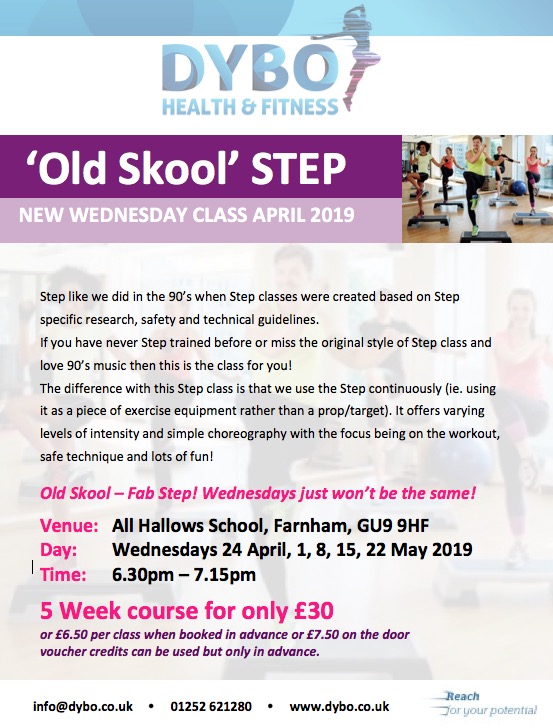
‘OLD SKOOL’ Step is a hit! Wednesdays 6.30-7.15pm
Last weeks class was fully booked!
So If you wish to come along, book ahead. You can pay online to guarantee your place, contact me for bank details!
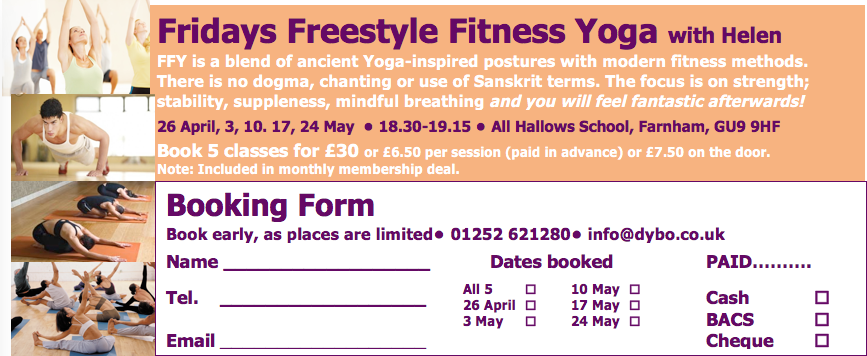
So was Fridays Fitness Yoga, 6.30-7.15pm…
Another full house on Friday so book ahead to ensure you place on the mat!
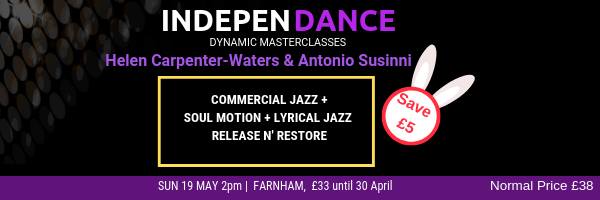
IndepenDANCE, Easter offer ends on Tuesday 30th April!
WE have a new Routine for this Thursday’s Dancespiration class!
7.30-8.30pm
I’m really excited to share my choreography to Billie Eilish’s ‘Bad Guy’, fabulous track and really inspring. It’s a great week to start or return.
GUT HEALTHY RECIPE
Asparagus, avocado & quinoa tabbouleh
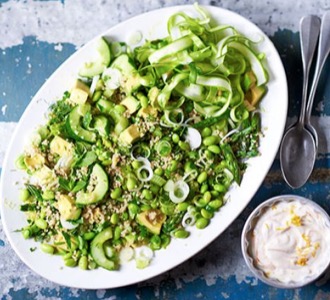
(bbcgoodfood.com)
Ingredients
- 300g quinoa
- 250g soya beans
- 12 fat asparagus spears, woody ends snapped off and tips and stalks separated
- 300g Greek yogurt (More from Helen, I use Coconut)
- 1 tsp sweet paprika, plus a pinch to serve
- 2 garlic cloves, crushed
- zest and juice 2 lemons
- ½ large cucumber, halved lengthways, seeds scooped out with a teaspoon, sliced
- 4 spring onions(we used the ones with the fat bottoms), thinly sliced
- large pack mint, leaves picked
- 2 small packs dill, roughly chopped
- large pack parsley, roughly chopped
- 2 avocados, stoned, peeled and cut into chunks
- juice of 3 limes
- 1 tbsp agave syrup (Note from Helen,I would prefer Honey)
- 2 tbsp rapeseed oil
Method
- Cook the quinoa following pack instructions, then leave to cool. Bring a pan of water to the boil, add the soya beans and cook for 2 mins, then add the asparagus tips and cook for 1 min more. Drain everything and leave to cool.
- Meanwhile, mix the yogurt with the paprika, garlic and most of the lemon zest. Season and chill.
- Using a vegetable peeler, slice the asparagus stalks into thin ribbons (you won’t be able to do the whole stalk as it will get too thin, but these pieces are perfect for soup.) Keep in iced water until ready so they curl.
- On a large platter, combine the quinoa, cooked soya beans and asparagus tips, cucumber, spring onions, herbs and avocado. Drain the asparagus ribbons and add them too. Whisk together the lime and lemon juices, agave syrup, rapeseed oil and some seasoning, then pour over the salad and gently toss to mix. Serve with the yogurt alongside, topped with the remaining lemon zest.
Have a fab week my darlings, see you soon.
Love ya,
Helen x
